| Outlet | DR | Credibility | Ref Domains | Traffic |
|---|---|---|---|---|
| HubSpot | 92 | ★★★★★ | ~95k | 1.8M |
| Fast Company | 91 | ★★★★★ | ~110k | 2.4M |
| Bored Panda | 83 | ★★★★★ | ~57k | 1.7M |
| AZ Big Media | 76 | ★★★★★ | ~14k | 14k |
| GoBankingRates | 81 | ★★★★★ | ~25k | 140k |
| TechBullion | 79 | ★★★★★ | ~31k | 10k |
| Connectively | 72 | ★★★★★ | ~3.8k | 7k |
| College Recruiter | 67 | ★★★★★ | ~2.1k | 1.8k |
| PR On The Go | 36 | ★★★★★ | ~450 | 350 |
| Westfield Creative | 54 | ★★★★★ | ~680 | 1.1k |
| Best Companies AZ | 48 | ★★★★★ | ~1.9k | 3.2k |
| EmbedSocial | 71 | ★★★★★ | ~4.2k | 9k |
| Carol Roth | 62 | ★★★★★ | ~3.1k | 5k |
| Zupyak | 58 | ★★★★★ | ~2.4k | 4k |
The Easiest Wins on Featured (And Why Most Lists Still Get This Wrong)
A few years ago the easy-win lists felt reliable. Certain publications moved fast, asked soft questions, and handed out links with minimal friction. That version of the game still exists in pockets, but the overall terrain has hardened. Editorial standards drift. Platforms get pickier. And a surprising number of “easy” targets now either ignore most pitches or quietly lower the quality bar until the link is barely worth having.
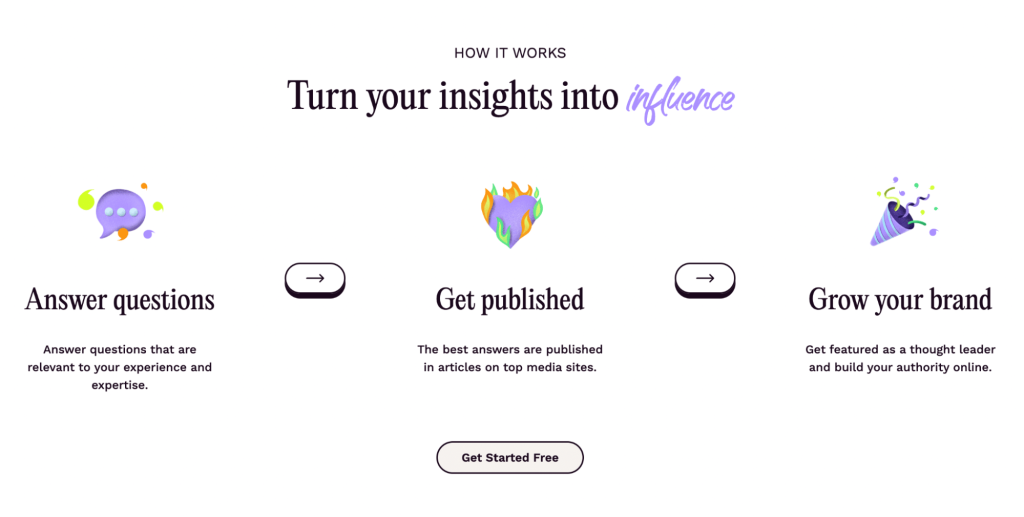
Featured improves the process. Instead of competing in a chaotic open firehose of requests, you pitch inside a system designed for expert answers and clear attribution. It is cleaner. It is more trackable. It is still competitive, and it still rewards people who understand the difference between a real opportunity and a soft target that looks better on a list than it performs in practice.
This is not a celebration of easy links. It is a practical shortlist of publications that still publish, still attribute, and remain attainable if you pitch with some discipline. Read the brief every time. The best results still come when your expertise actually fits.
Fast Company
Fast Company sits in that rare tier of business media that still carries cultural weight. The site covers innovation, leadership, technology and design with enough editorial polish that a mention feels like more than a transactional placement.
Links from Fast Company are strong when the angle is sharp and the contribution is genuinely useful. They are less impressive when the pitch is generic thought leadership. The bar is higher than many lists pretend, and the site has become more selective over time. Still worth prioritising if the fit is real.
Bored Panda
Bored Panda is a high-volume viral content machine with global reach, built on emotionally engaging, curiosity-driven stories. The visibility is real. The consistency of who gets included is less so.
Miguel, the key contact many people deal with, is hit and miss. He has been known to include some contributors and quietly sideline others with little explanation, and he does not budge once a decision is made. Treat it as a YouTuber-style operation more than a traditional editorial desk. Useful when the story fit is natural. Easy to overvalue if you only look at the metrics.
AZ Big Media
AZ Big Media is a regional business publisher that continues to punch above its geographic weight. It covers Arizona’s business ecosystem with pieces on leadership, innovation, real estate, finance and growth sectors, and maintains higher editorial standards than many national volume sites.
Links from here tend to feel cleaner because they come from a genuine publisher rather than a content mill. Search engines still notice that distinction. The site rewards contributors who understand the local business context and can speak to it without forcing a national template onto a regional audience.
For brands that want authority reinforcement without the usual noise and churn of higher-volume platforms, AZ Big Media remains one of the more reliable mid-tier options. It is not the loudest name on the list, but it is one of the more honest ones.
GoBankingRates
GoBankingRates is a major U.S. personal finance publisher covering banking, savings, investing, credit cards, retirement and consumer money habits. The content is data-driven and largely evergreen, which gives the site real staying power in a competitive vertical.
The authority is genuine, but the “easy win” framing is optimistic. Finance remains one of the more scrutinised categories, and generic commentary is filtered more often than the optimistic lists suggest. Links here are valuable when the expertise is specific and credible. They are less impressive when the contribution is interchangeable.
What many lists skip is the practical reality of pitching finance publications. The best-performing contributions tend to bring original data, clear methodology, or a narrowly useful consumer insight. Broad “here are five tips” pieces are abundant and rarely move the needle. If you cannot offer something sharper than what is already ranking, the response rate drops quickly.
Used correctly, GoBankingRates still delivers solid topical reinforcement in one of the most competitive SEO verticals. Used lazily, it becomes another ignored pitch in a crowded inbox.
TechBullion
TechBullion is the kind of site that looks better on a metrics spreadsheet than it feels in practice. It covers startups, fintech, blockchain, AI and emerging tech at high volume, and the domain numbers are respectable enough to keep it on most lists.
The problem is depth. Much of the content reads like it was produced to satisfy a publishing calendar rather than to say anything particularly useful. The editorial filter is lighter than the DR suggests, and the site has a habit of accepting contributions that stronger technology publications would reject without a second glance.
That makes it relatively easy to land. It also makes the resulting link easier to overvalue. Visibility and topical relevance are available here at scale. Long-term authority weight is harder to defend. If your strategy depends on collecting as many tech mentions as possible, TechBullion will cooperate. If your strategy depends on links that still mean something in two years, you may want to be more selective.
There is a place for sites like this. Just do not pretend they sit in the same category as the stronger names on this list.
Connectively
Connectively is the current name for what many people still think of as Featured. The platform connects journalists with verified professionals across business, marketing, finance, health and technology, and positions itself as a cleaner alternative to older PR query systems.
There is an 8-point quality signal that is worth paying attention to, and the overall environment is still good. Links earned through Connectively usually appear in editorial-style content and are treated more like trust signals than placements. Solid for brands focused on authority, expertise and long-term credibility. Not a volume play, and not trying to be one.
The rebrand carousel continues. HARO becomes Connectively, Connectively gets shut down, Featured buys the corpse, resurrects HARO, then decides the future is calling itself Connectively again while wrapping an “AI co-pilot” label around the same core job. At some point the constant renaming stops looking like strategy and starts looking like a company that cannot decide what it actually is. The underlying work has not changed: experts still need to reach journalists. Dressing that up as a co-pilot does not automatically make the recommendations better, the matches cleaner, or the noise lower.
There is a familiar pattern here. Expand the surface area, add more opportunity types, promise fewer tabs, and hope the AI layer papers over the fact that relevance is still the hard problem. Bigger feeds are easy. Better filtering is not. Until the system proves it can consistently surface the right opportunities instead of simply more of them, “co-pilot” risks becoming a polite word for a larger, slightly smarter inbox.
PR On The Go
PR On The Go is a compact publication covering media relations, pitching strategy and public relations tactics. It targets communications professionals and small teams looking for practical guidance.
The relevance is obvious if you work in earned media or PR tooling. The authority is limited. Links function mainly as contextual signals. Easy to land, easy to over-index on, and unlikely to move any meaningful ranking needle on their own.
Westfield Creative
Westfield Creative publishes supporting content around creative strategy, branding and digital execution. The site’s authority is focused rather than broad.
Links are most useful as relevance plays for brands in creative services, branding, agencies or digital marketing. They support contextual trust more than raw ranking power. Appropriate in the right campaign, forgettable in most others.
Best Companies AZ
Best Companies AZ focuses on Arizona’s business and employer landscape. One recent example worth noting is their piece on professionals relocating from California to Arizona, which reflects the kind of regional economic storytelling the site does well.
Links from here carry local relevance and moderate authority. Useful for brands with a genuine Arizona connection or a workforce/relocation angle. Limited value outside that context.
EmbedSocial
EmbedSocial publishes practical content around social media tools, aggregation, and related marketing technology. Their guide on social media aggregators is a typical example of the kind of utility-focused content that attracts relevant links.
Links here work best for brands in social media tooling, marketing technology or content platforms. The topical fit is clear. The authority is solid without being elite.
Carol Roth
Carol Roth’s site mixes business commentary, entrepreneurship and practical workplace advice. Pieces such as the recent tips on employee retention sit in a clear professional-development lane.
Links from here offer moderate authority and decent contextual relevance for HR, leadership and small-business topics. Not a heavyweight, but cleaner than many pure volume plays.
Zupyak
Zupyak hosts a wide range of contributed content. One example is the long-form piece on evidence-based digital health tools and how to evaluate them for outcomes, care coordination and efficiency.
Links from Zupyak are highly dependent on the specific article and niche. In health, digital health and related professional topics they can provide useful contextual signals. Outside those areas the value drops quickly. Treat on a case-by-case basis rather than as a default target.
The pattern is consistent. The highest-value targets still combine real editorial standards with enough substance to matter over time. The easier ones are useful only when the fit is precise and the expectations are realistic. Most lists blur that distinction because it is more convenient to present everything as a win. This one does not.